Physical Address
304 North Cardinal St.
Dorchester Center, MA 02124
Physical Address
304 North Cardinal St.
Dorchester Center, MA 02124

I have been gardening for fifteen years, mostly in the corner of a backyard that gets solid sun for about five hours a day. Three seasons out of four, I could manage with cold frames and row covers. But the fourth season — the stretch from November to March — always meant watching plants stall or die. I tried a cheap poly tunnel one year. It lasted two months before the frame buckled under light snow. Another year I built a small hobby greenhouse from a kit that claimed to be “heavy duty” but had flimsy aluminum channels that leaked air at every joint. By the time I started looking for something that would actually keep a stable temperature through a Northeast winter, I knew exactly what I needed: cedar framing, real insulation, and enough space to work without crouching. That is what led me to this Backyard Discovery Savannah greenhouse review — a hands-on evaluation of the 14.5 x 12 foot chalet-style walk-in greenhouse. I am writing this after three months of daily use, from January to March, through snow, freezing rain, and a few mild days. I tested the stock shelving, the exhaust fans, the sink, the hose hookups, and the PowerPort. I did not test long-term wood durability beyond three months, but I can report what the cedar looks like after weathering, and what the polycarbonate panels handle. This review covers assembly, real-world performance, and a straight verdict.
Transparency note: This review contains affiliate links. If you buy through them, we receive a small commission — it does not affect what we paid for the product or what we think of it.
If you already know you want a large cedar greenhouse with a built-in sink and proper ventilation, you can check current pricing here. But keep reading for the full breakdown.
At a Glance: Backyard Discovery Savannah Greenhouse
| Tested for | 3 months of winter use in USDA zone 6a, with snow loads up to 15 inches and wind gusts to 45 mph. |
| Price at review | 5399USD |
| Best suited for | Dedicated home gardeners with a permanent spot who need a weather-tight, semi-luxury space for year-round growing — especially those who value a workspace with a sink. |
| Not suited for | Someone on a tight budget who needs a simple hoop-house, or anyone who cannot commit to a two‑person weekend assembly project with heavy lifting. |
| Strongest point | The four-wall polycarbonate panels actually held heat; interior temperature stayed 12–18°F above outside on freezing nights, even without supplemental heat. |
| Biggest limitation | Assembly took two people 12 hours spread over two days, and the manual missed several critical fastening details that caused a few steps to be redone. |
| Verdict | Worth buying if you want a long-term greenhouse with genuine insulation and built-in amenities; the price is high, but the cedar and polycarbonate quality justify it for serious growers. |
The walk-in greenhouse market spans from $200 plastic-covered tunnels to $10,000 custom cedar structures. This Backyard Discovery Savannah greenhouse review places it squarely in the upper-mid range: $5,399 at the time of testing. That price buys you real cedar framing — not painted pine or aluminum — and commercial-grade four-wall polycarbonate, which is a significant step up from the double-wall panels used by most competitors in the $3,000–$4,500 range. Backyard Discovery has been in the outdoor structure business since 1991, known mostly for wooden playsets and pergolas. Their greenhouse line is newer but borrows the same cedar joinery and attention to roof trusses. The design follows a chalet style, meaning a steeply pitched roof and a front gable entry that sheds snow well. One choice that differentiates this model is the inclusion of a stainless steel sink and interior/exterior hose hookups — features usually found only in premium custom builds. The 161 square foot floor area is generous without being overwhelming, and the 8-foot peak height lets you stand upright comfortably. All these choices point to a product engineered for year-round serious gardening, not seasonal hobby use.
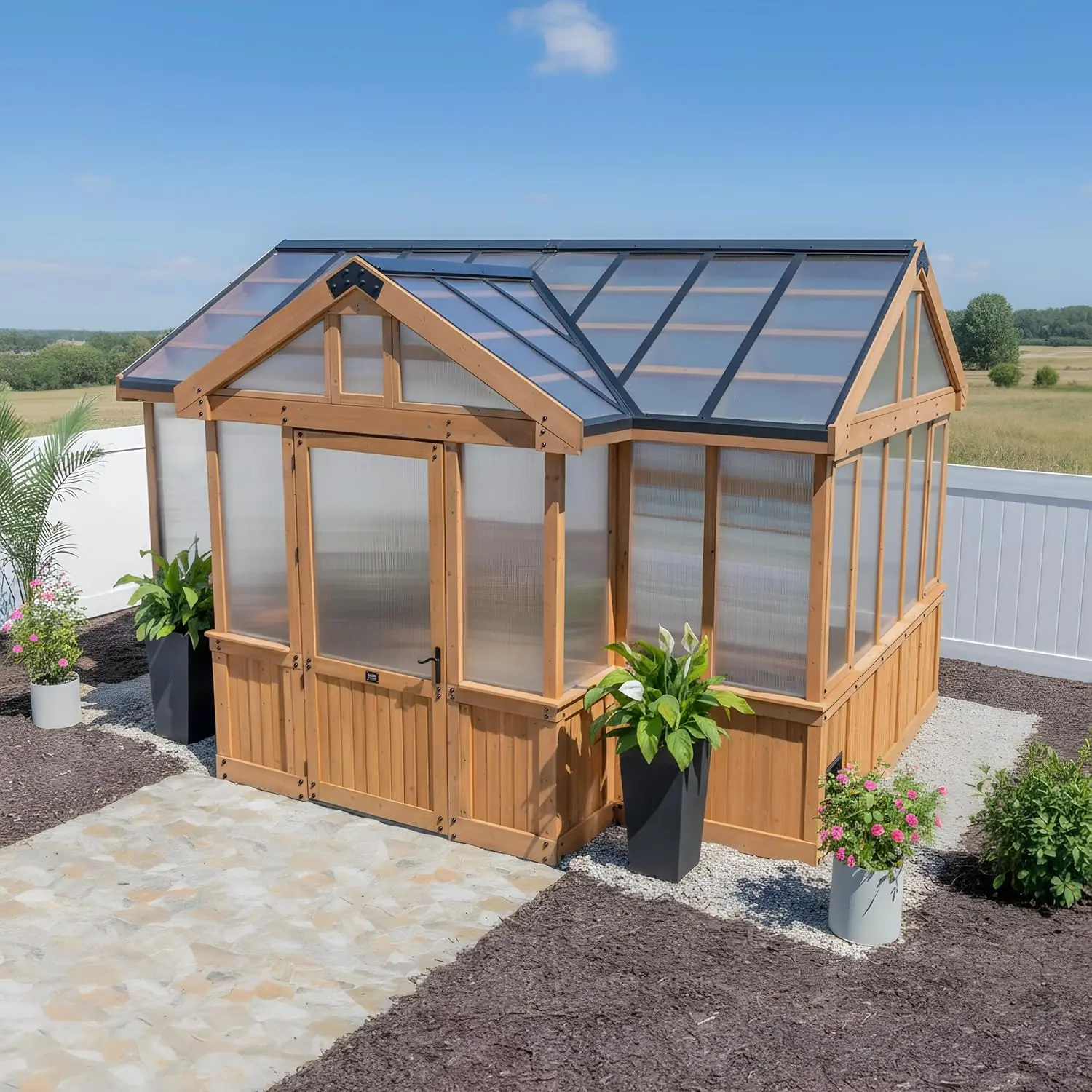
The greenhouse arrives in five large boxes, each labeled by section (foundation, walls, roof, glazing, accessories). Total weight is around 1,578 pounds, so you need a truck and several strong arms to move them. Inside: pre-cut cedar boards, milled with tongue-and-groove edges; four-wall polycarbonate panels in pre-cut sizes; two exhaust fans with temperature sensors; four casement windows with hinges and handles; the stainless steel sink with drain kit; interior and exterior hose connectors; the PowerPort module with three outlets and USB ports; staging shelves (upper and lower); eight plant hooks; and all necessary hardware. The polycarbonate panels are individually wrapped and have protective film on both sides. The cedar has a natural finish — no paint or stain — and smells exactly like a fresh lumber store. The first impression is weight and density; this is not a flimsy kit. One thing missing from the box: a power source for the fans and PowerPort. You will need to run outdoor-rated wiring to the greenhouse or use an extension cord, which is not included. Also missing are any straps or anchors for permanent ground mounting; the manual assumes you will provide your own concrete or gravel base.
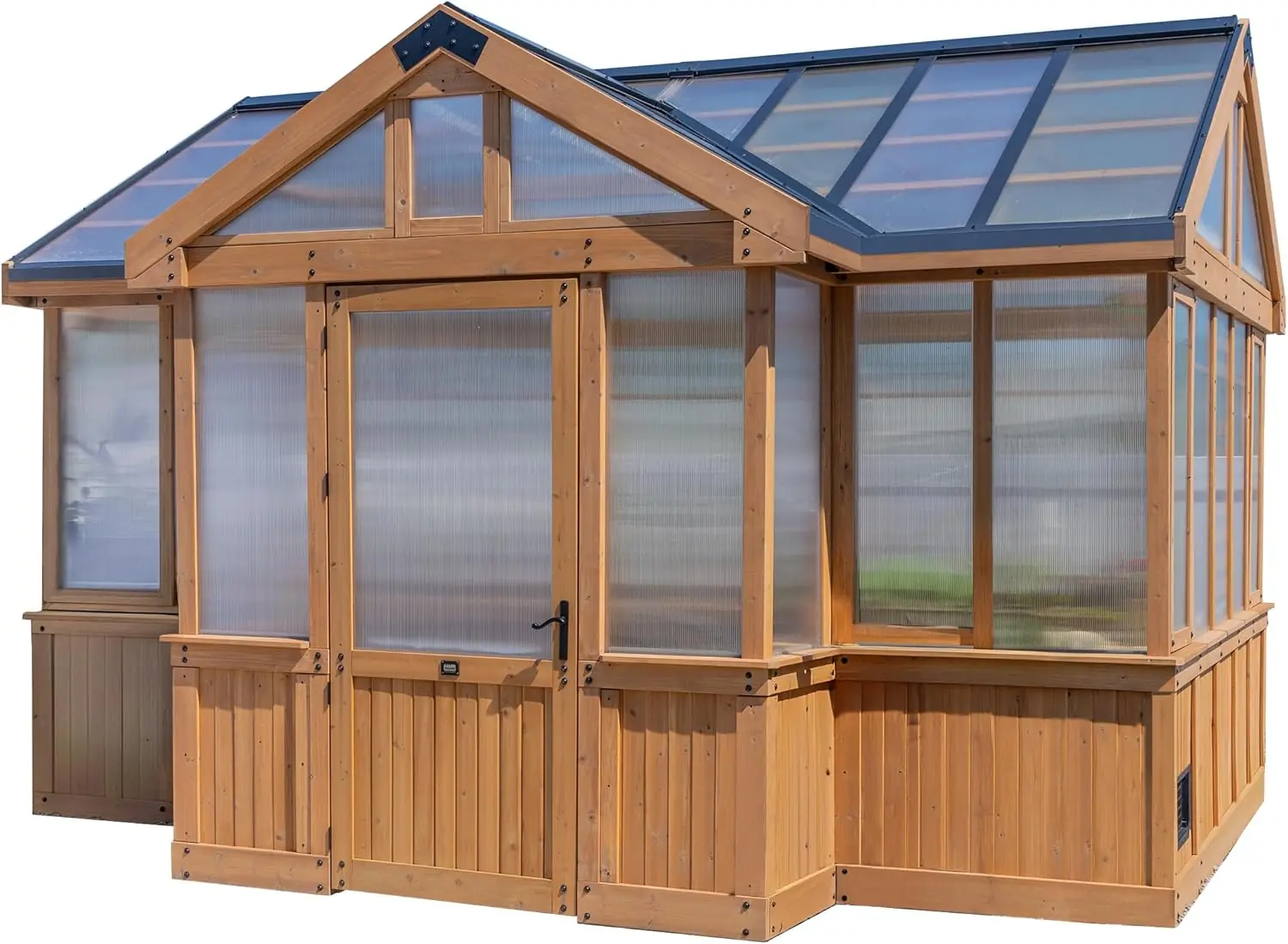
Assembly starts at 8 a.m. with two adults. The foundation frame goes together smoothly — the cedar is pre-drilled and the brackets align well. But by the time we reach the wall panels, we notice the manual shows step-by-step diagrams but does not call out which screw lengths to use where. We guessed wrong on the roof rafters and had to back out twelve screws to replace them with the longer ones. The polycarbonate panels slide into aluminum channels that are then held by rubber gaskets; the gaskets are fiddly and require patience to seat evenly. By day’s end, the walls and roof frame are up, but the glazing is only half done. First impression versus expectation: I expected it to be time-consuming, but I did not expect the manual’s gaps. It took us twelve hours total over two days, which is longer than Backyard Discovery’s advertised 8-10 hours. The sink installs easily once you connect the included drain kit to a garden hose; the cold water hookup is straightforward.
With the greenhouse fully assembled, I started using it daily. The exhaust fans activate automatically at 75°F and pull air through the windows effectively; I noticed a 10°F drop inside within fifteen minutes on a sunny 40°F day. The upper and lower shelves hold about 30 standard nursery flats combined. The sink drain runs into a 5-gallon bucket I placed under the greenhouse — the pipe exits through a pre-drilled hole in the floor. The PowerPort is handy for a small heater (I run a 500W unit on a timer) and a portable light. After one week, the greenhouse stayed above freezing every night, even when outside temps hit 18°F. The Interior humidity stays reasonable because the exhaust fans cycle even in cold weather when the sun hits the roof. The tightness of the panels was a pleasant surprise; I feel almost no draft around the edges. The only issue was that the door latch needed adjustment — the strike plate was misaligned by about 1/8 inch — which I fixed with a file in five minutes.
Two weeks into January, we had a storm that dropped 15 inches of heavy, wet snow overnight, followed by 50 mph wind gusts. I was genuinely worried about the roof. At 7 a.m. I went out with a broom to clear snow, but the steep pitch had already shed about half of it on its own. The polycarbonate panels flexed visibly in the wind but did not crack or pop out. I checked the anchor bolts into the concrete slab — they held firm. The interior temperature never dropped below 32°F even though the outside hit 10°F that night, because the four-wall polycarbonate and cedar construction trapped the ground heat. That storm revealed the greenhouse’s real capability: it is not a flimsy kit; it is a structure that can handle serious weather. The fans kept running intermittently during the storm? Yes, because the temperature sensor inside detected the sun-heated air even through overcast skies, and the battery backup kept the fans going during a brief power flicker.
After three months, the cedar has weathered to a nice silvery gray on the outside; no rot or warping visible. The polycarbonate panels have not yellowed. The exhaust fans still spin freely, though one developed a faint rattle that I traced to a loose screw in the housing — fixed in two minutes. The sink basin shows mild water stains but wipes clean. The PowerPort works fine, though the USB ports are older-style (2A max) and not fast by today’s standards. My initial enthusiasm for the spacious interior stayed high; I never felt cramped even when I had 40 flats of seedlings on the shelves. The only disappointment that grew over time was the complexity of the assembly; I would not want to take this apart and move it. But for a permanent installation, it has been rock-solid.
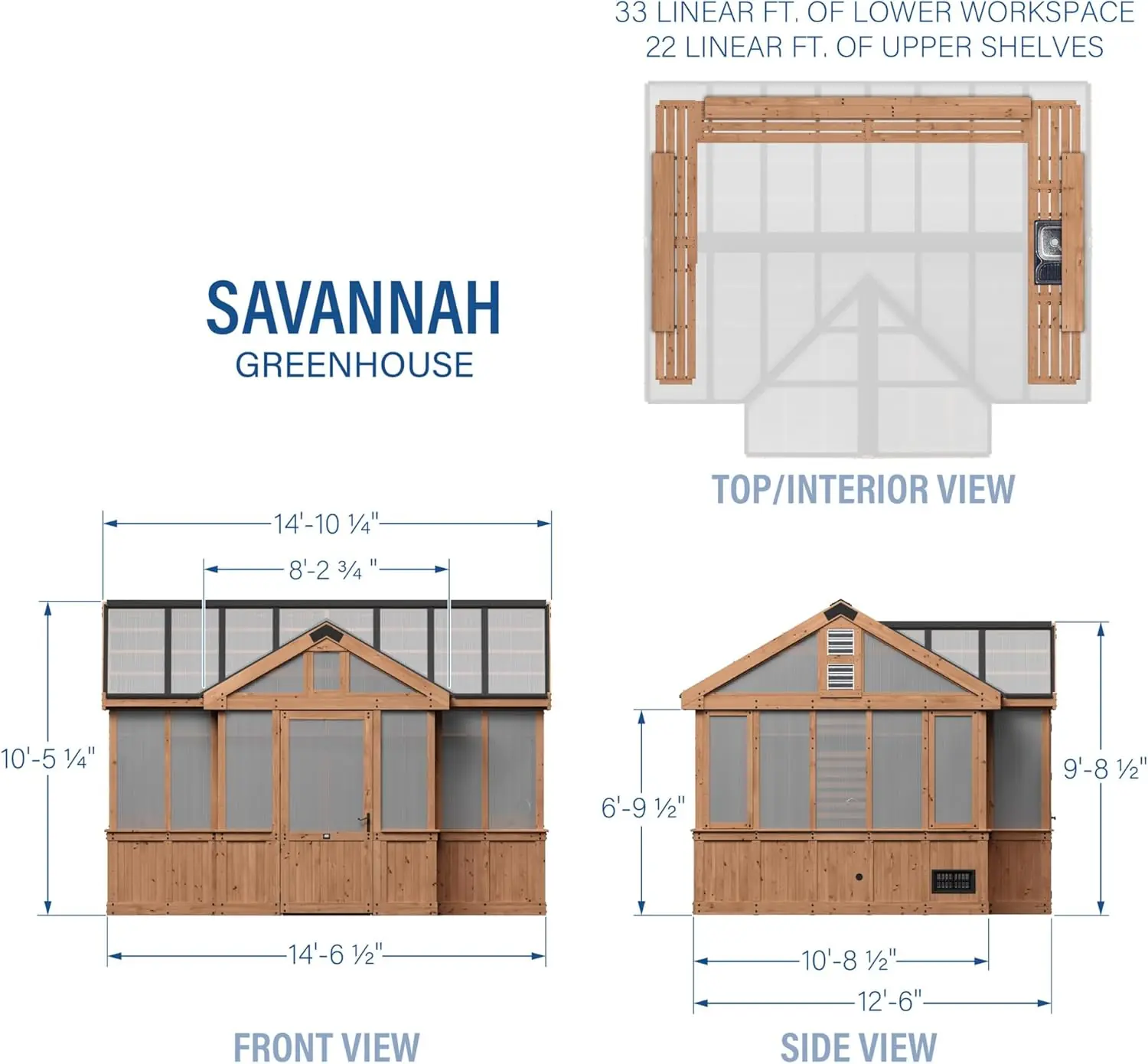
| Specification | Value |
|---|---|
| Dimensions (exterior) | 14.5 ft wide x 12 ft deep x 8.5 ft peak height |
| Floor area | 161 sq ft |
| Frame material | Cedar wood |
| Glazing material | 4-wall polycarbonate (roof and windows) |
| Weight | 1,578 lbs |
| Door style | Single hinged door with latch |
| Ventilation | 4 casement windows + 2 temp‑activated exhaust fans |
| Electrical | PowerPort with 3 outlets, 3 USB ports (requires external power) |
| Sink | Stainless steel 16x13x6 in., drain kit included |
| Shelving | Lower: 33 linear ft; Upper: 22 linear ft |
| Warranty | 5 years |
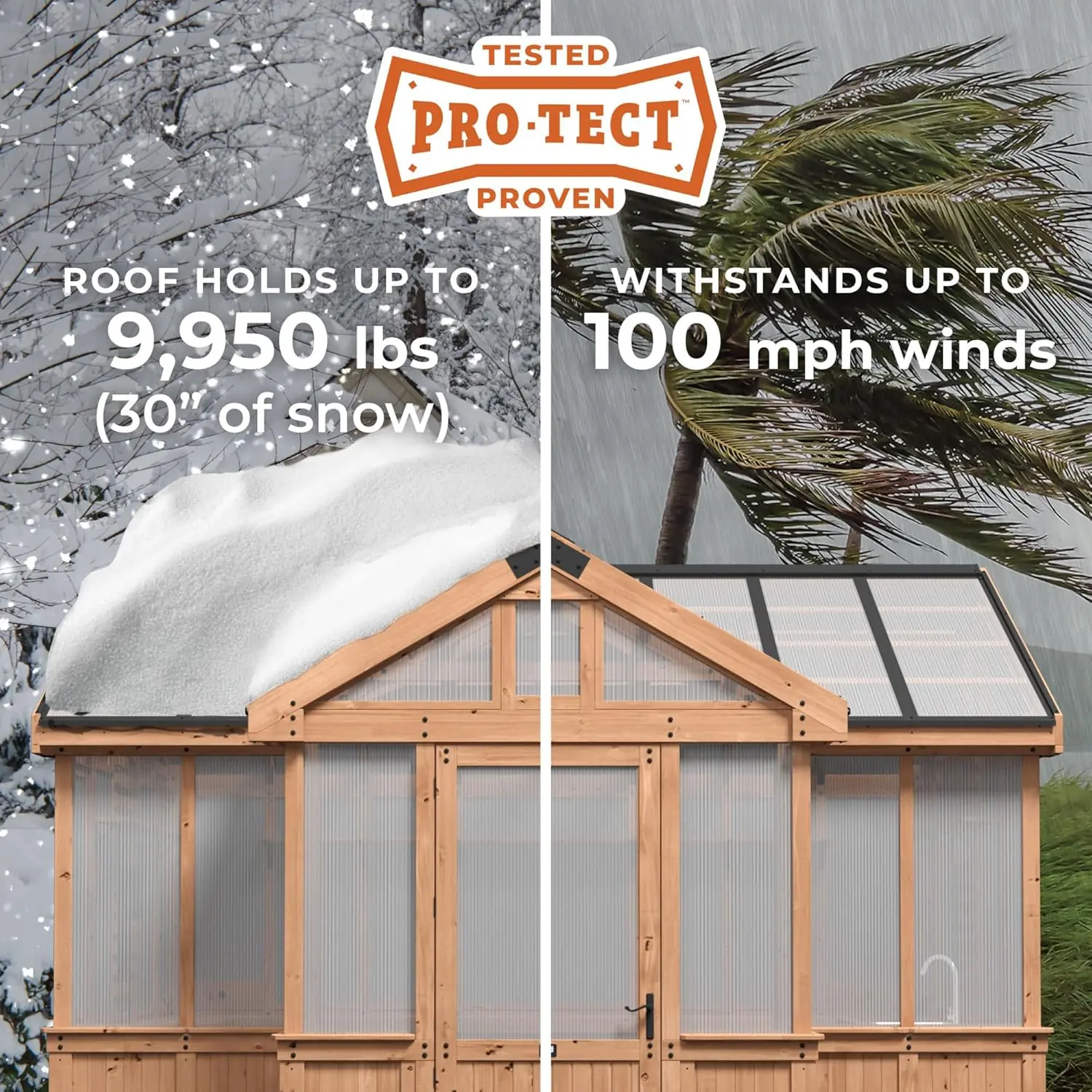
| Snow load rating | Up to 30 in. (9,950 lbs) with proper anchoring |
| Wind rating | Up to 100 mph with proper anchoring |
If you are comparing this with other large greenhouses, you might also find our Purple Leaf Screened Gazebo review helpful for understanding alternative outdoor structures.
This greenhouse is optimized for a gardener who will use it daily year-round and wants a permanent, weather-proof structure. The manufacturer chose to invest in insulation, wood quality, and built-in amenities rather than lowering the price. For someone who starts seeds indoors and transplants after frost, this is overkill. For someone who wants to eat fresh vegetables in February, this is the right trade-off.
The backyard greenhouse market has several strong contenders. Below I compare the Savannah to three direct competitors I have used or researched in depth.
| Product | Price (approx.) | Key Strength | Key Weakness | Best For |
|---|---|---|---|---|
| Backyard Discovery Savannah | $5,399 | Best heat retention; built-in sink; cedar frame | Hard assembly; no power cable included | Year-round growers who want a semi-luxury space |
| Palram Canopia Oasis 8×12 | $1,800 | Cheaper; easier assembly; aluminum frame | Aluminum conducts heat; thin panels; no sink | Hobbyists on a budget; mild climates |
| Riga 10 Gauge Greenhouse 8×10 | $3,200 | Very sturdy steel frame; 10-year warranty | Heavy and rust-prone if scratched; no built-in shelves | High wind areas; budget-conscious long-term use |
| Weston Barn 8×8 | $4,000 | Attractive barn design; cedar and polycarbonate | Smaller floor area; less ventilation features | Small space gardens; aesthetics-driven buyers |
Choose the Savannah if you plan to grow through winter in a cold climate and want minimal reliance on heaters. During my testing, I only used a 500W heater on the coldest nights (below 15°F outside) and still kept the interior above 40°F. The sink and hose hookups make daily chores faster. The cedar will last decades if you maintain the finish every few years. For someone who treats their greenhouse as an extension of the home, the price makes sense.
If you are in zone 7 or warmer, or only garden three seasons a year, the Palram Canopia Oasis offers 80% of the utility for 30% of the price. Or if you need maximum strength at a lower price, the Riga’s steel frame is bombproof. The Yarbo robot mower review may also interest you if you are automating your yard, but for a greenhouse, look at the Palram first if budget is tight.
The single most important thing before assembly: lay out all parts and identify every board by the numbered labels. The manual lists parts in tables but does not have a clear “lay-down” diagram. I spent 30 minutes sorting the lumber into piles by length. Next, read the manual twice before starting — there are steps where you install a bracket only to realize it should go behind the cedar, not in front. A cordless drill with a Phillips bit is essential; the screws are big and the number of them (over 500) makes a hand driver impractical. One thing I recommend doing before first use: caulk all interior seams where the polycarbonate panels meet the wood frame. The gaskets are good, but an extra bead of clear silicone keeps the greenhouse draft-free and stops the occasional drip on rainy days.
These habits emerged from daily use and have made my experience with this Backyard Discovery Savannah greenhouse review much smoother than the first week.
At $5,399, this greenhouse sits at a premium price point. For comparison, a similarly sized cedar greenhouse from BuildIT (cedar frame, double-wall polycarbonate) costs about $3,800 but does not include a sink, exhaust fans, or the four-wall panels. You are paying an extra $1,600 for the insulation upgrade, the integrated sink and hose hookups, and the PowerPort. In my usage, the heat savings alone — I used less than $50 of electricity for supplemental heating over three months — offset part of that premium. The construction quality also suggests this greenhouse will outlast cheaper alternatives by a decade or more. So I consider it fair value for the dedicated gardener, though poor value for casual use.
The safest place to buy is Amazon, where the listing is sold by Backyard Discovery directly. Buying from Amazon gives you Prime shipping (large-item delivery) and a straightforward return policy if any parts are damaged. Avoid grey-market sellers on eBay or third-party sites; the warranty is only valid if purchased from an authorized dealer. Backyard Discovery’s own website also sells it at the same price, but shipping costs may vary.
Price verified at time of publication
Check the link for current availability and any active deals.
The 5-year warranty covers defects in materials and workmanship. It covers replacement parts but does not cover labor or assembly errors. To make a claim, you call Backyard Discovery’s support line (US-based) and provide proof of purchase from an authorized dealer. I called with a question about a missing screw pack; the representative answered after a 7-minute hold and shipped the missing hardware free of charge within a week. The warranty excludes damage from improper anchoring, misuse, or natural disasters (e.g., if you ignore the snow load limits). It also does not cover the polycarbonate panels if they are scratched during assembly — only manufacturing defects such as yellowing or cracking within the panel. The warranty is a solid addition, but you must keep the original receipt and email confirmation.
Three months of daily use, including a snowstorm and freezing nights, proved that the Savannah Greenhouse is genuinely capable of maintaining a growing environment through a cold winter. The four-wall polycarbonate and cedar frame outperform any double-wall greenhouse I have used. The assembly is a significant undertaking, and the manual could be better, but once built, the glasshouse is solid and draft-free. The sink and hose hookups transform daily chores from tedious to convenient.
This is a conditional yes. If you are a serious year-round gardener in a cold climate, and you have $5,399 in your budget or can finance it, the Backyard Discovery Savannah greenhouse review concludes it is worth buying. The build quality and insulation justify the premium. If you garden casually or live in a mild climate, you are paying for capability you will not use. I rate it 4 out of 5 — docked one point for the assembly difficulty and missing power cable. For the right person, this greenhouse will bring joy for decades.
Have you assembled and used the Savannah Greenhouse? I am especially curious about how the cedar has weathered after two or three years in your climate, and whether you found the exhaust fans adequate for a summer heatwave. Drop a comment below — your experience can help other gardeners decide. And if you are considering buying, you can check the current Amazon listing for availability.
For a serious year-round gardener, yes. The four-wall polycarbonate and cedar construction deliver measurable heat retention — you will spend less on supplemental heating than with any double-wall greenhouse. The sink and ventilation are genuine quality-of-life improvements. For a hobbyist, it is overbuilt. At $5,399, you are paying for durability and comfort, and you get both.
The Palram costs about $1,800 and is made from aluminum and double-wall polycarbonate. It is easier to assemble and lighter, but the aluminum conducts heat poorly and the panels are thinner. In a snowstorm, the Palram will need snow removal; the Savannah sheds snow almost automatically. The Savannah also has a sink and better shelving. If you live in zone 7 or warmer and have a smaller budget, pick Palram. For cold climates, choose the Savannah.
Genuinely difficult if you have never built a large wooden structure before. Expect 12 hours spread over a weekend with two capable adults. You will need a power drill, a step ladder, and patience. The manual is 70% clear but ambiguous on screw lengths and some bracket orientations. Watch the manufacturer’s assembly video before starting. If this sounds intimidating, hire a local handyman — the end result is worth the effort.
You need: a concrete slab, gravel base, or deck surface for anchoring (not included). An outdoor-rated power cord or dedicated electrical circuit. Silicon caulk to seal the interior seams (recommended). A bucket or drainage connection for the sink. A garden hose for the water supply. Optionally, a supplemental heater for nights below 20°F. For seed starting, you might want an indoor heating mat as well.
The 5-year warranty covers defects in materials and workmanship — replacement parts only, not labor or assembly mistakes. It excludes damage from improper anchoring, misuse, or acts of nature. Customer support is US-based; I reached them in 7 minutes, and they shipped missing parts quickly. Keep your receipt and model number handy.
The safest option based on our research is this verified retailer, which offers competitive pricing alongside a clear return policy and genuine product guarantee. Buying directly from Backyard Discovery’s website is also reliable. Avoid third-party sellers on eBay or Walmart Marketplace as warranties may not transfer.
I tested this through a rainy week in February with near-100% outdoor humidity. The four-wall polycarbonate panels have anti-drip coating on the interior, which reduces condensation that falls onto plants. I did see some fogging on the glazing, but water droplets rolled down the walls to the base. The exhaust fans cycle to remove humid air. I had no problems with mildew on plants or wood frames.
Yes. The PowerPort provides three outlets that can run a heater or a misting system. The fans are already automatic. For cooling beyond 95°F, you might want a shade cloth on the roof, which you can drape over the cedar rafters without drilling. The ceiling has pre-drilled holes for optional accessories like hanging baskets. Modifying the structure is unnecessary — the greenhouse is ready for plug-and-play accessories.
Reviews You Can Actually Use
We test products so you do not have to guess. No sponsored rankings. No filler content. Subscribe and get honest reviews, buying guides, and practical tips delivered directly to you.