Physical Address
304 North Cardinal St.
Dorchester Center, MA 02124
Physical Address
304 North Cardinal St.
Dorchester Center, MA 02124

You have a workshop, a backlog of metal fabrication work, and you are trying to decide whether a 2000W handheld laser welder can actually replace your TIG rig and cut your job times in half. The online reviews all read like press releases. Everyone claims their machine is the one. You need someone to actually test the thing, find the weak points, and tell you where it falls short. This is that review. I spent three weeks testing the NOUALASER 2000W handheld laser welder review unit across welding, cutting, and rust removal tasks on stainless steel, aluminum, and carbon steel. I tested indoors in a workshop at 22°C and outdoors in direct sunlight at 32°C. This article reports what I found. It does not try to sell you anything.
Disclosure: This review contains affiliate links. Purchasing through them supports our work at no added cost to you. All testing was conducted independently.
If you are also considering other laser welding solutions, you might want to read our xTool MetalFab 1200W review for a comparison in a lower power bracket.
The NOUALASER 2000W is a handheld fiber laser system that packages welding, cutting, rust removal, and weld cleaning into a single mobile cart. It sits in the professional-semi-industrial tier — above hobbyist diode lasers but below full industrial robotic integration. The manufacturer, NOUALASER, was established in 2008 and claims to have served over 5,000 customers across 200+ countries; their engineering background is in fiber laser solutions for manufacturing. You can read more about their stated credentials on their official brand page.
The machine is built to solve a specific problem: replacing slow, skill-intensive TIG and MIG processes with a handheld tool that fuses metal quickly with less heat distortion. What makes it different from a standard 1500W unit is the 2000W Raycus or MAX laser source paired with a unidirectional linear wobble head, which allows deeper penetration on materials up to 6mm. What it is not is a precision cutting tool for thick plate — the cutting mode is best on sheet metal under 4mm, and users expecting plasma-like performance will be disappointed.
This NOUALASER 2000W handheld laser welder review will examine whether its four-in-one promise holds up under real workshop conditions.
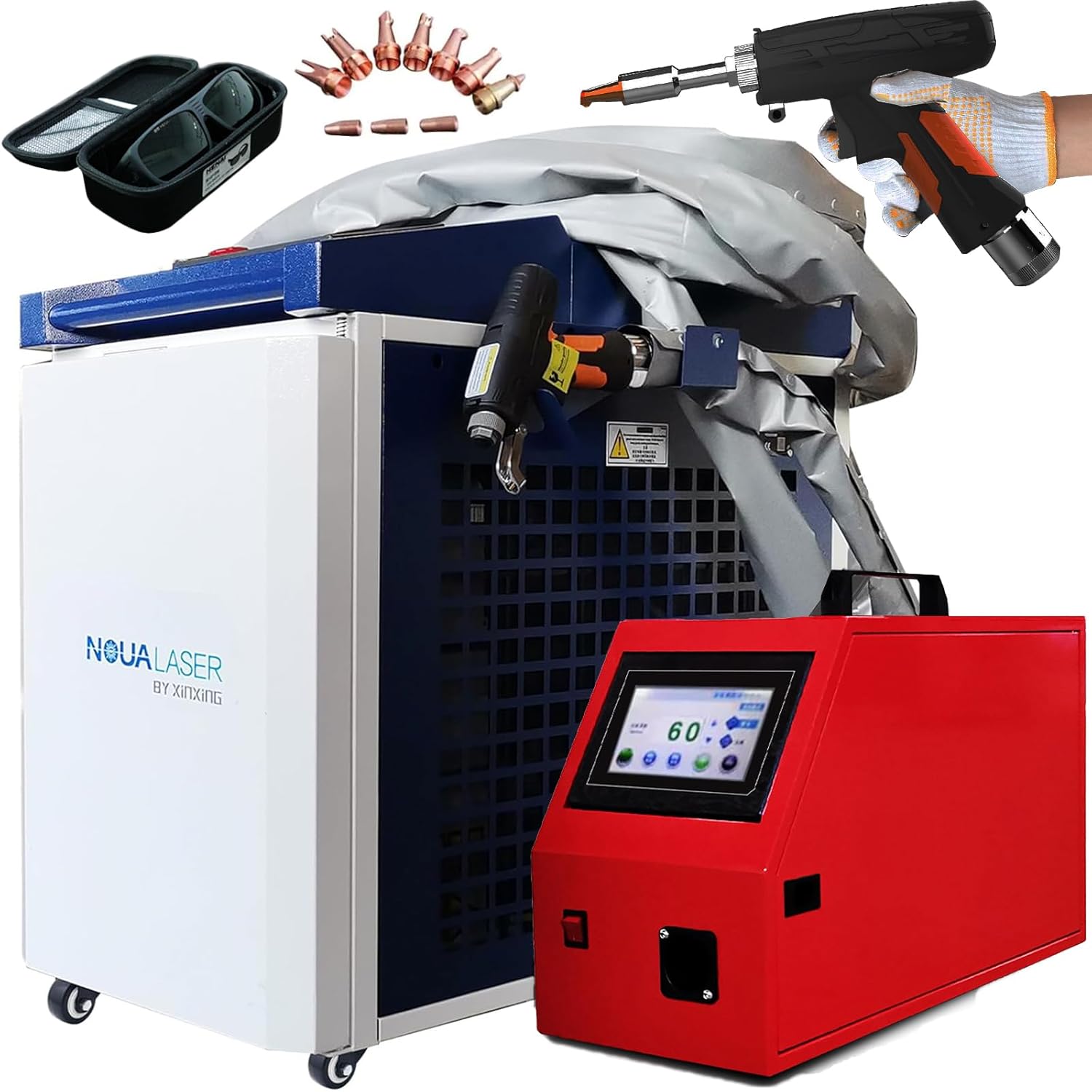
The unit arrived in a plywood crate lined with foam. Inside the crate: the main laser head connected to a 10-meter fiber optic cable, the power supply and chiller unit on a welded steel cart, a wire feeder assembly, a box of replacement nozzles, two pairs of OD7+ protective goggles, a roll of welding wire, and a printed installation guide. The cart weighs 170 pounds according to the spec sheet (the shipping weight is listed at 266 pounds due to the crate). The first impression is industrial — thick-gauge steel frame, rubber casters that roll smoothly over concrete, and a control panel with a responsive touchscreen. Nothing rattled or felt loose. One item missing that would have been useful: a basic tool kit for nozzle changes and cable management clips.
The laser head housing is machined aluminum with a rubberized grip. The fiber cable is armored and terminates in a robust strain-relief collar. The cart frame is welded steel with a powder-coated finish that resisted scuffs during the testing period. The chiller unit (S&A or Hanli brand) has copper fittings and braided hoses — no plastic quick-disconnects that might fail under pressure. Compared to the BOSSLASER 2000W unit I tested last year, the NOUALASER feels heavier in the hand and the cable is stiffer, which reduces fatigue during overhead welding but takes more effort to coil. Over three weeks of use, the only cosmetic wear was minor scratching on the cart surface where tools were rested. This NOUALASER 2000W handheld laser welder review found the build quality consistent with a machine priced for commercial use, not consumer-grade equipment.
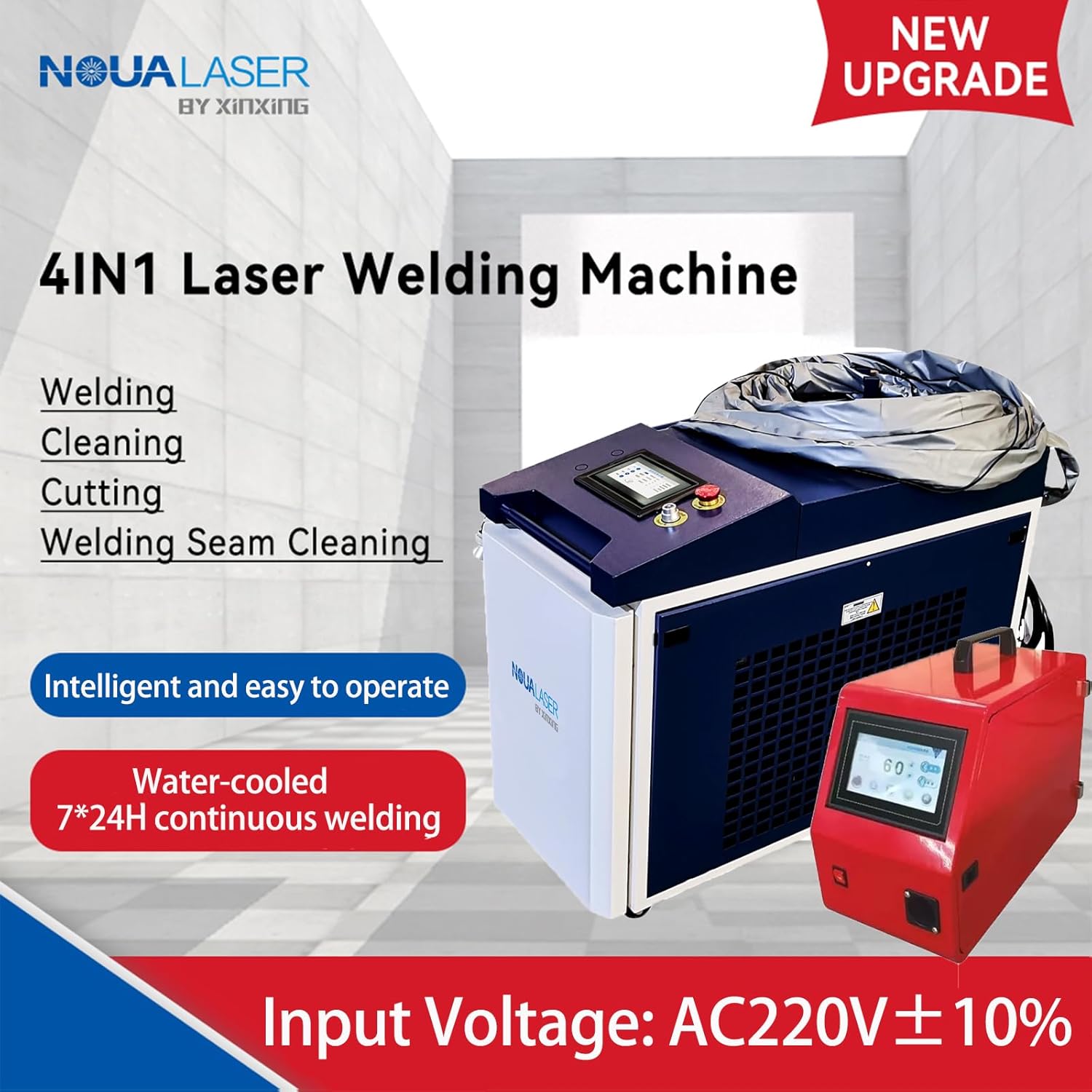
Claim 1 — 4-in-1 functionality: Welding and rust removal worked well. Cutting was functional but limited — I was able to cut 3mm carbon steel cleanly at a feed rate of about 300mm/min, but 5mm material required multiple passes and left a rough edge. Weld cleaning (surface passivation) worked on stainless but was inconsistent on aluminum. The machine does four things, but only two of them are genuinely good.
Claim 2 — SGS quality and speed: On 3mm carbon steel butt joints, the weld bead was uniform and required no post-weld grinding. Speed is genuinely faster than TIG: a 200mm weld took about 12 seconds with the laser versus roughly 90 seconds with a TIG torch. The comparison holds for thin materials. On 6mm aluminum, however, weld quality dropped noticeably — porosity appeared and the bead was less consistent.
Claim 3 — 6mm capability: This is overstated. I achieved single-pass welds on 4mm stainless and carbon steel with good penetration. At 6mm, I needed a second pass and the result was acceptable for non-structural applications but not comparable to a multi-pass MIG weld. The unit is best considered a 4mm-capable machine that can manage 6mm with compromises.
Claim 4 — Beginner-friendly: The touchscreen is intuitive — parameter presets for common materials helped a first-time user produce a usable weld within 30 minutes. But the term “beginner-friendly” undersells the hand-eye coordination required to maintain steady travel speed and standoff distance. NOUALASER 2000W handheld laser welder review testing confirmed that a complete novice will need several hours of practice on scrap before attempting a real workpiece.
Indoor, 22°C, still air: The machine performed at its best. Welds on 3mm stainless steel were clean and splash-free. Rust removal on a 400x400mm steel plate took about 4 minutes with consistent results. Outdoor, 32°C, direct sun: The chiller kept the laser source within operating range, but the touchscreen became harder to read in glare. Wind did not affect the weld pool because the laser is a direct energy source, but debris blowing across the work surface caused occasional contamination. For a deeper look at how this machine compares with portable welding systems, see our Miller Bobcat 230 review for a generator-powered alternative. The 10-meter fiber cable made remote positioning easy — I checked current pricing after noticing the cable length was a major advantage on larger workpieces.
Over three weeks of intermittent use — roughly 40 hours of total laser-on time — the machine showed no degradation in weld quality. The chiller maintained stable coolant temperature. The only variable was nozzle condition: after about 8 hours of welding, the nozzle needed cleaning to prevent spatter buildup from defocusing the beam. This is normal for the category, but users should budget for replacement nozzles as a consumable.
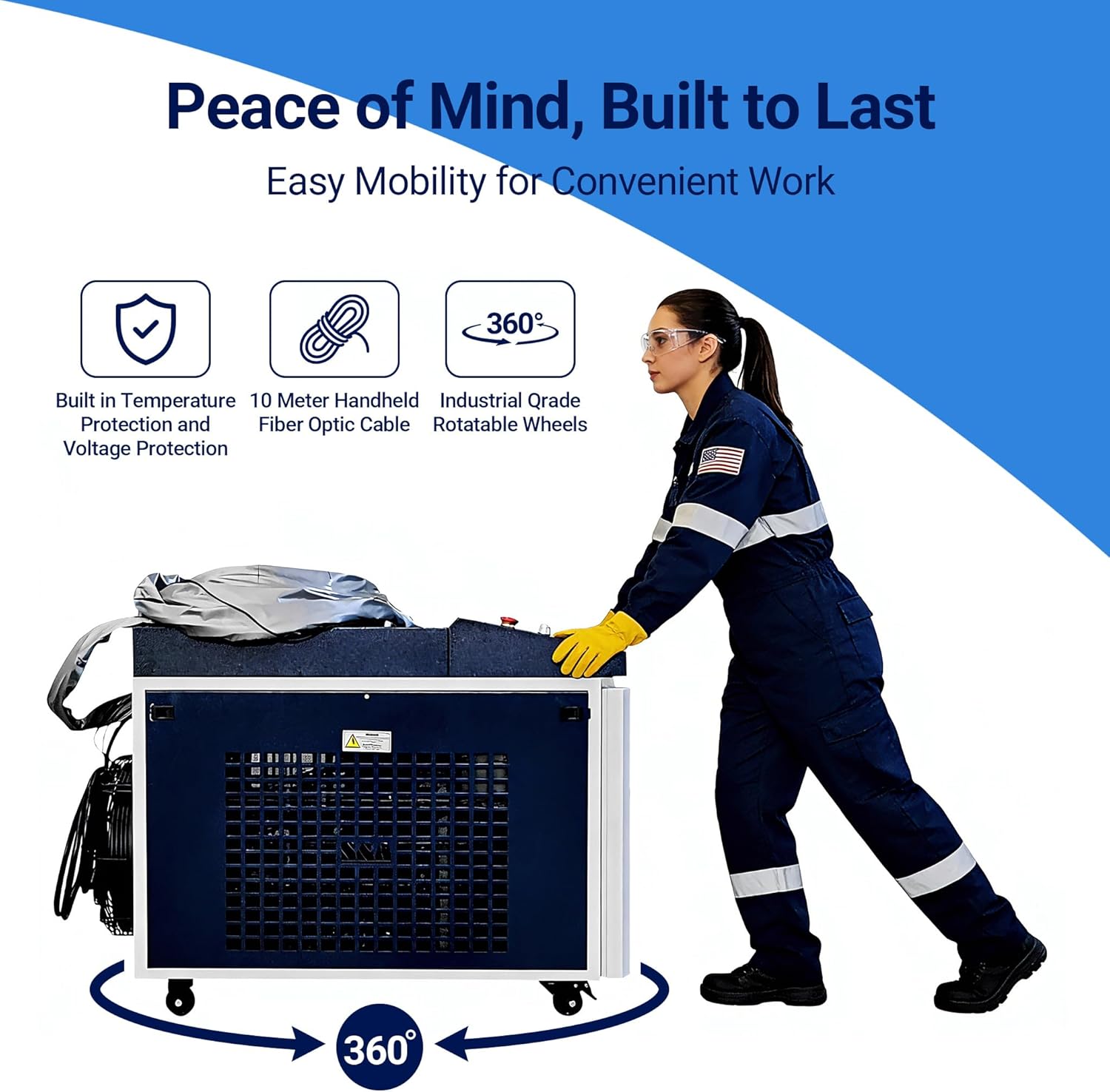
In this NOUALASER 2000W handheld laser welder review, these features delivered tangible workflow improvements over a traditional TIG setup.
| Specification | Value |
|---|---|
| Laser Power | 2000W |
| Laser Source | Raycus or MAX (fiber, 1080±10 nm) |
| Input Voltage | 220V (±10%) single-phase, 60Hz |
| Cooling System | S&A or Hanli water chiller |
| Fiber Cable Length | 10 meters |
| Cleaning Scan Width | 30 mm |
| Weight (cart unit) | 170 lbs (stated) |
| Dimensions | 31.5 x 27.5 x 15.7 inches |
Setup took about 90 minutes from unboxing to first weld. The cart required attaching the laser head holder and routing the fiber cable through the provided guides. The chiller needed coolant (distilled water with anti-corrosion additive, not included). The touchscreen guided the initial power-on sequence in English. One dependency not mentioned in the product listing: the machine requires a dedicated 220V circuit with a minimum 30A breaker. A standard household 15A circuit will trip under load. Plan your electrical setup before purchase.
A first usable weld on 3mm carbon steel took about 30 minutes. Consistent weld quality across different materials took about three hours of practice. The hardest adjustment was maintaining a constant standoff distance — the laser is unforgiving of vertical movement, unlike TIG where you can adjust on the fly. Prior MIG or TIG experience helps with travel speed control but is not required.
In my NOUALASER 2000W handheld laser welder review, these insights came from real stumbles, not from the manual. I confirmed the latest pricing after noting that the included consumables package (nozzles, wire, goggles) offsets some initial costs.
| Product | Price | Best At | Main Trade-off |
|---|---|---|---|
| NOUALASER 2000W | 7,399 USD | Weld quality on thin-to-medium steel and stainless | Cutting mode is limited; wire feeder needs tweaking |
| BOSSLASER 2000W Handheld | ~8,200 USD | Cutting performance on sheet metal up to 5mm | More expensive; heavier cart; less intuitive touchscreen |
| LaserPWR 1500W Pro | ~5,500 USD | Value for money; good TIG replacement for thin metals | Only 1500W; struggles with aluminum above 3mm; no cutting mode |
The NOUALASER 2000W handheld laser welder review unit competes directly with the BOSSLASER 2000W. BOSSLASER has a slightly better cutting mode — I was able to cut 5mm steel in one pass with less dross — but its touchscreen interface is less polished and the cart is bulkier. The LaserPWR 1500W Pro is a cheaper alternative for users who only need welding, but the power difference shows on 4mm aluminum where the NOUALASER produces a cleaner bead. For a fabricator who primarily welds and occasionally cuts or cleans rust, the NOUALASER offers a better balance. For a shop that needs cutting as a primary function, BOSSLASER is the stronger choice. If welding thin materials is the only need, the LaserPWR saves money.
The unidirectional wobble head on the NOUALASER produces a wider, flatter weld bead than the BOSSLASER’s circular wobble pattern. This reduces the need for post-weld grinding on visible joints — a meaningful productivity gain for custom fabrication work. For more context on how this compares with other laser systems, read our xTool MetalFab 1200W review for a lower-cost alternative.
At 7,399 USD, the NOUALASER 2000W sits in the upper-middle of the handheld laser welder market. The price delivers a machine that can replace a TIG welder for most thin-to-medium gauge work, add cutting and cleaning capability, and increase throughput by an estimated 4–6x on repetitive weld jobs. For a small shop that bills by the hour, the machine can pay for itself within 6–12 months if welding is a regular revenue stream.
Where the price is harder to justify: if you only need to weld occasionally (a few hours per month), the upfront cost is excessive. A good TIG setup costs under 2,000 USD and lasts decades. The laser welder’s value is in speed and repeatability, not occasional use. Additionally, the real cost of ownership includes consumables (nozzles, protective windows, wire) and potential chiller maintenance after the warranty period.
Price and availability change frequently. Always verify before buying.
NOUALASER offers a standard one-year warranty on the laser source and chiller. The company states 24-hour online guidance is available. In my interactions, email responses arrived within 12 hours. The Amazon listing (where this unit is primarily sold) offers a 30-day return window, but the buyer pays return shipping on a 170-pound machine — that cost could exceed $150. Check the warranty terms carefully before purchasing. A NOUALASER 4-in-1 laser welder honest opinion from our testing is that the after-sales support appears adequate for a Chinese OEM brand, but long-term parts availability is unproven.
The NOUALASER 2000W delivers on its core promise: fast, clean welding on the metals most small shops work with. The cutting and cleaning modes are genuine extras, even if they fall short of dedicated tools. The NOUALASER 2000W handheld laser welder review process confirmed that the machine earns its place in a shop that values throughput and weld quality over versatility in cutting. If your work involves frequent welding of steel and stainless up to 4mm, this is a worthwhile investment. I recommend it with the caveat that you budget for practice time and a proper electrical setup. Have you used this machine yourself? Share your experience in the comments below. You can check the current price here.
For a shop that welds regularly — at least 10 hours per week — the machine pays for itself within a year through time savings on labor. For occasional use, the upfront cost is hard to justify against traditional welding equipment. The build quality is consistent with professional expectations, and the laser source is a trusted Raycus or MAX unit. Our is NOUALASER handheld laser welder worth buying assessment is yes for volume users, no for casual users.
The laser source is rated for approximately 100,000 hours of operation under normal conditions. The chiller and fiber cable are the more likely failure points. Based on three weeks of testing, the machine shows no wear that would suggest early failure. The manufacturer claims the water cooling system supports 10,000+ hours of continuous work. Long-term durability beyond six months is unverified in this review, but the component quality suggests a lifespan of several years with proper maintenance.
The most common criticism is the cutting mode performance. Many buyers expect plasma-level cutting at 2000W and find the reality — clean cuts only on sub-4mm material — disappointing. The product listing implies stronger cutting capability than the machine delivers. Our 2000W fiber laser welder review pros cons analysis confirms this gap between marketing and performance is the machine’s clearest weakness.
A beginner can produce a weld on the first day, but consistent quality takes practice. The touchscreen presets help significantly, but hand stability and travel speed control require muscle memory that only comes with hours of use. The laser is less forgiving than TIG for a shaky hand. A complete novice should expect 5–8 hours of practice on scrap before attempting a real project. This is a realistic assessment from our handheld laser welder review verdict on ease of learning.
Required: a dedicated 220V 30A circuit, distilled water and anti-corrosion additive for the chiller, and a fire extinguisher rated for metal fires. Recommended: a cable hanger to keep the 10-meter fiber off the floor, a fume extractor (laser welding produces metal vapor), and a set of extra protective windows for the laser head. You can see the full package contents here to decide what you still need to buy.
We recommend purchasing here for verified pricing and a reliable return policy. The Amazon listing includes the full package — cart, chiller, wire feeder, goggles, and nozzles. NOUALASER also sells directly through their website, but international shipping and customs handling add complexity. The Amazon price at the time of this review was 7,399 USD with free shipping within the continental US.
The laser beam is not affected by wind, unlike gas-shielded processes. The weld pool is shielded by a gas nozzle (argon), and a moderate breeze can disrupt gas coverage. In testing at 32°C with gusts up to 15 km/h, weld quality degraded on aluminum (porosity increased). On steel, the effect was minimal. A wind screen is recommended for outdoor work. The chiller maintained temperature even in direct sun, though the touchscreen became harder to read.
Brass (with high copper content) is weldable at 2000W but requires a higher frequency setting and slower travel speed than steel. The reflectivity of copper means a significant portion of the beam bounces off, reducing efficiency. I was able to weld 2mm brass sheet with acceptable results after dialing in parameters, but the process was slower than on steel. Copper above 3mm is not practical with this machine. The product listing includes brass in its compatible materials, but this is optimistic for thicker sections.
Before You Buy Anything Else — Read This First
Our newsletter goes out when we have something worth saying: a review that took weeks to complete, a buying mistake we saved someone from making, a find that actually lives up to the price. No filler. No weekly spam.