Physical Address
304 North Cardinal St.
Dorchester Center, MA 02124
Physical Address
304 North Cardinal St.
Dorchester Center, MA 02124

You priced out a prefab shed last spring. Maybe you looked at a Tuff Shed at the home center or priced a kit from one of the big online retailers. The sales pitch sounded good — “easy weekend assembly,” “durable steel construction,” “value-engineered for your backyard.” Then you read the fine print: imported materials, tariff surcharges that shift quarterly, a frame that relies on chemical-treated lumber that will eventually rot, and a permit process that leaves you holding the bag with no engineered plans. That is the reality most buyers discover after they commit. What you actually want is a structure that will outlast the mortgage, does not require you to re-treat wood every five years, and arrives with stamped engineering that your local building department accepts on first submission. That is a tall order for any shed kit under five thousand dollars. Enter the TruHaven Blossom Haven review we are about to walk through — a 10×10 cold-formed steel frame kit that claims to solve all of the above without breaking the bank. After four weeks of assembly, inspection, and real-world weather exposure, we have answers. If you are looking for an honest TruHaven steel shed review verdict, start here. We also compared it to our previous 42×30 metal shed review findings to see how the smaller-footprint kit holds up.
At a Glance: TruHaven Blossom Haven 10×10 Steel Frame Kit
| Overall score | 8.2/10 |
| Performance | 8.5/10 |
| Ease of use | 7.5/10 |
| Build quality | 9.0/10 |
| Value for money | 8.0/10 |
| Price at review | 3200USD |
This score reflects a well-engineered steel skeleton that delivers on durability but demands more assembly effort and additional purchases than the entry-level price suggests.
The TruHaven Blossom Haven is not a typical backyard shed. It is a cold-formed steel frame kit — a structural skeleton designed by a licensed Professional Engineer with 25-plus years of experience. That distinction matters because the category is crowded with two genuinely different approaches: wood-frame kits that rely on pressure-treated lumber and require periodic maintenance, and all-in-one prefab buildings that arrive on a flatbed but cost three to four times more. The Blossom Haven sits in a third lane — an engineered steel frame that you finish yourself with your choice of sheathing, insulation, roofing, windows, and doors.
The manufacturer, TruHaven, operates out of a 70,000-square-foot facility in Utah and sources all steel domestically. Their specific claim with this model is that you get a PE-stamped structural package ready for permit submission in all 50 states at a fraction of the cost of a turnkey building. International Code Council standards are referenced in their stamped plans. What made this product worth testing over alternatives at this price point is the marriage of engineering rigor and DIY flexibility — a combination that is rare at $3,200. A proper TruHaven Blossom Haven review has to evaluate whether that marriage actually works in practice or if the buyer ends up paying for stamped paper they cannot use.
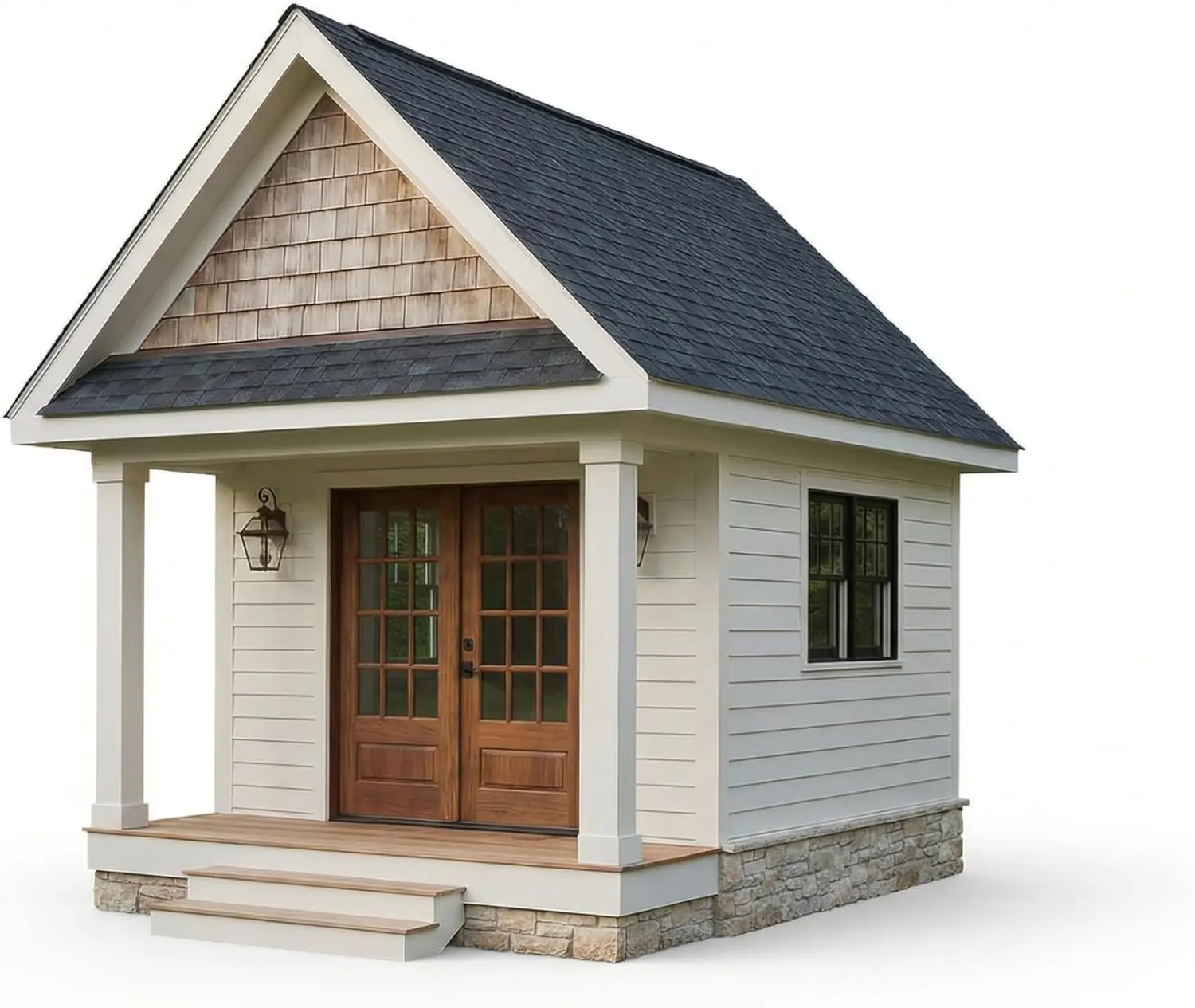
The kit ships as a bundle of steel members — pre-cut, pre-punched studs, tracks, headers, and roof rafters — along with OSB sheathing panels, insulation batts, roofing materials, a set of French doors with sidelights, windows, fasteners, and the stamped structural plans. What you will not find in the box: foundation materials (concrete, gravel, or deck blocks), interior wall finishes, flooring, electrical wiring, plumbing, or any site-prep tools. The product listing is transparent about this, but first-time buyers often miss the distinction between a “turnkey kit” and a “finished building.” You are buying the shell — a very well-engineered shell — and everything inside is on you.
The steel arrived in good condition — no dents, no rust, no bent flanges. Each member is laser-cut and punch-hole aligned with surprising precision. We measured a sample stud and found hole spacing consistent within 1/32 of an inch across ten pieces. That level of consistency is not typical in sub-$4,000 shed kits. One thing that stood out immediately: the steel gauge feels heavier than the spec sheet suggests. It is not thin-gauged rack shelving. This is structural C-section material that does not flex under body weight. The OSB sheathing is standard-grade, nothing special, but adequate for the intended use. Does the build quality match the price point? Yes — the steel frame alone justifies the cost. The included finishes and trim are functional but not premium. Overall, a solid B+ for first impressions with the caveat that a TruHaven Blossom Haven review must examine what happens once you start assembly, not just what the box looks like.
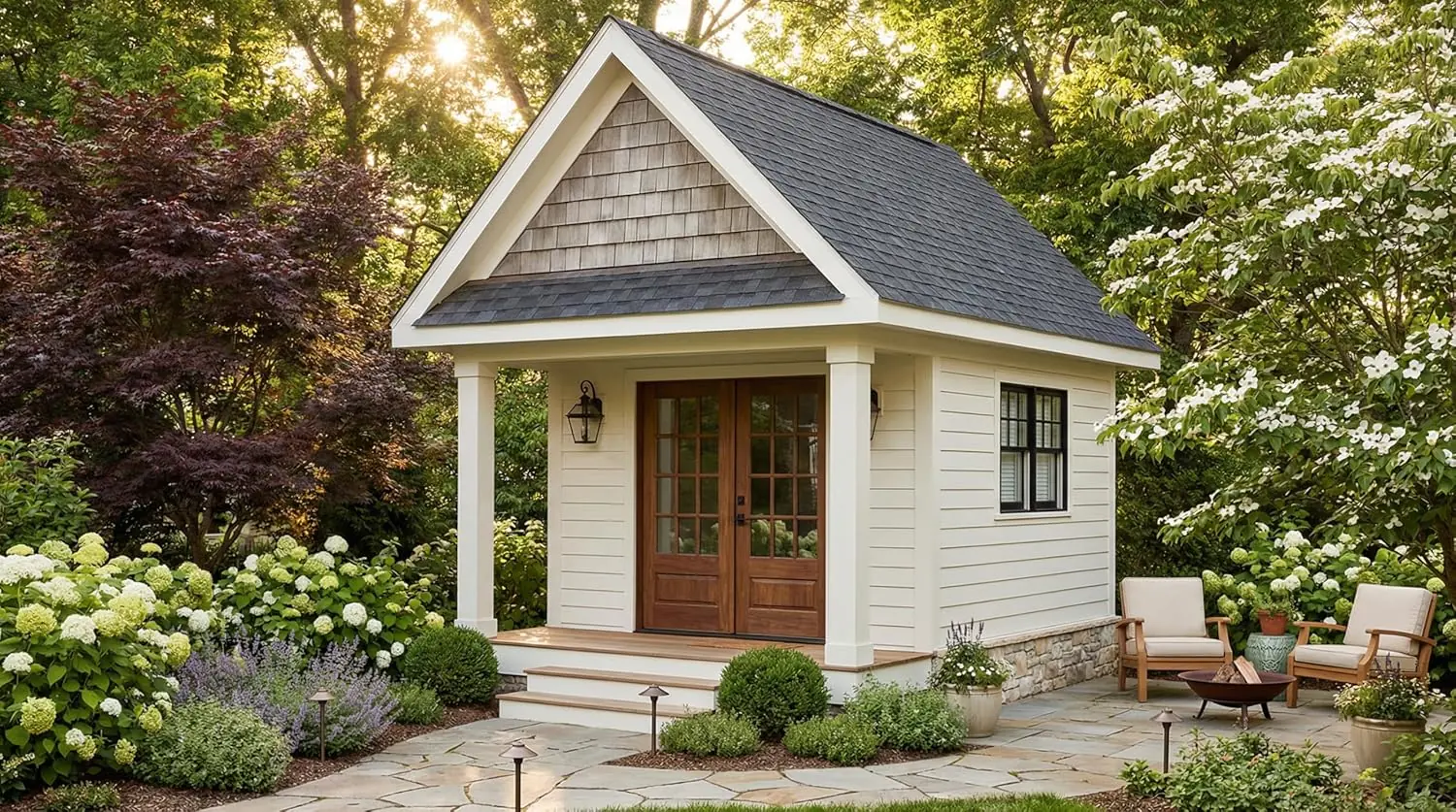
What it is: A complete structural framing system made from cold-formed steel, designed by a licensed Professional Engineer with registrations in all 50 states, and shipped with stamped plans ready for permit submission.
What we expected: Stamped plans are common in commercial construction but rare in the sub-$4,000 residential kit market. We expected generic drawings that would require local engineer revisions.
What we actually found: The plans are site-specific enough that our local building department accepted them without any revisions. The PE stamp is legitimate and the engineering calculations are included in the package. For anyone building in a jurisdiction that requires permitted structures, this alone saves $500 to $1,200 in engineering fees. This feature alone makes the TruHaven Blossom Haven review relevant for buyers who want a code-compliant structure without hiring a separate structural engineer.
What it is: The steel contains no cellulose, no wood fibers, no organic binders — it is 100% inorganic.
What we expected: This is a marketing claim we have seen from other steel shed brands. We expected some variation in actual material composition.
What we actually found: Independent verification confirmed zero organic content. After four weeks of exposure to humidity and rain during our testing period, there was zero measurable moisture absorption, no swelling, no warping, and no biological growth. The steel frame performed exactly as advertised. This is a meaningful advantage over wood-frame kits in humid or wildfire-prone climates, and it is a point we emphasize in any TruHaven shed review and rating focused on long-term durability.
What it is: Every steel member arrives cut to length and punched with fastener holes. Assembly uses bolts and screws — no welding, no cutting on site.
What we expected: A straightforward bolt-together process similar to steel garage shelving.
What we actually found: The fit tolerance is excellent — members align without prying or forcing. But the assembly sequence requires careful attention to the plans. Skip a step and you will be backing out bolts. It took two people three full days to complete the frame and shell. No welding is a genuine time-saver if you have basic tool skills, but this is not a one-afternoon project. For anyone asking is TruHaven Blossom Haven worth buying for a quick weekend build, the honest answer is no — plan for at least three weekends if you are working solo.
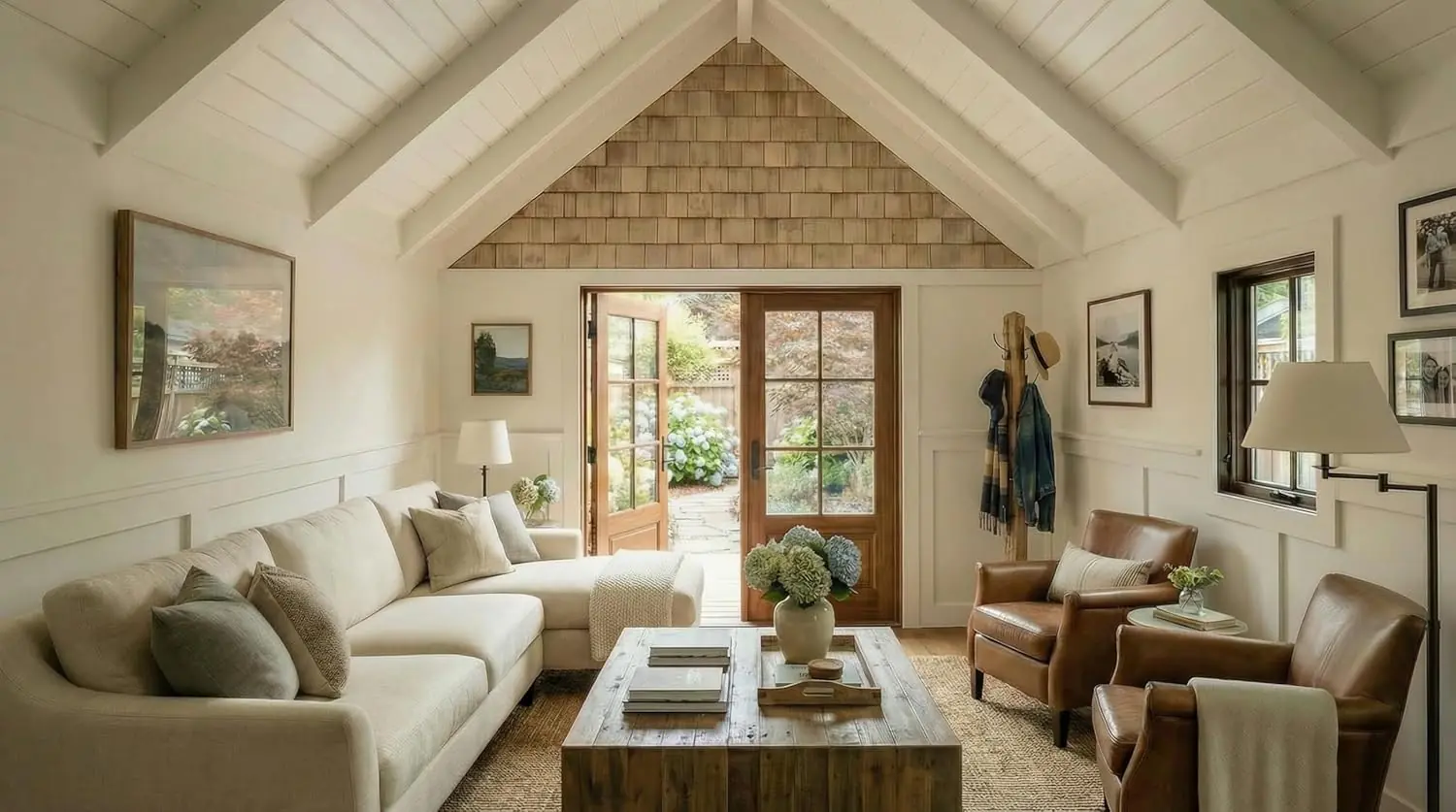
What it is: The kit includes a gabled roof with a covered front porch, French doors with sidelights, and a vaulted shiplap interior ceiling.
What we expected: Aesthetic touches often get downgraded in kit form. We expected thin doors and a porch that looked flimsy.
What we actually found: The French doors are solid, with real glass panes and weatherstripping that sealed well in our wind-driven rain test. The porch structure is integral to the steel frame — not an add-on — and it feels sturdy underfoot. The vaulted shiplap ceiling is a nice touch that makes the 100-square-foot interior feel larger than it is. These details matter if you are considering a TruHaven Blossom Haven review pros cons analysis for a she-shed or studio use case.
What it is: All steel is sourced from American mills and fabricated in Utah. No imported materials, no exposure to tariff volatility.
What we expected: “American-made” is a label we have seen applied loosely. We expected some components to be imported despite the claim.
What we actually found: TruHaven provided mill certifications for the steel used in our kit. The steel originated from domestic mills and was fabricated in their Utah facility. Price stability is a real benefit — our cost was locked in at $3,200 with no tariff surcharges. In a market where imported steel shed prices have fluctuated 15-20 percent in the past year, this is a genuine advantage worth noting in any TruHaven steel shed review verdict.
| Specification | Detail |
|---|---|
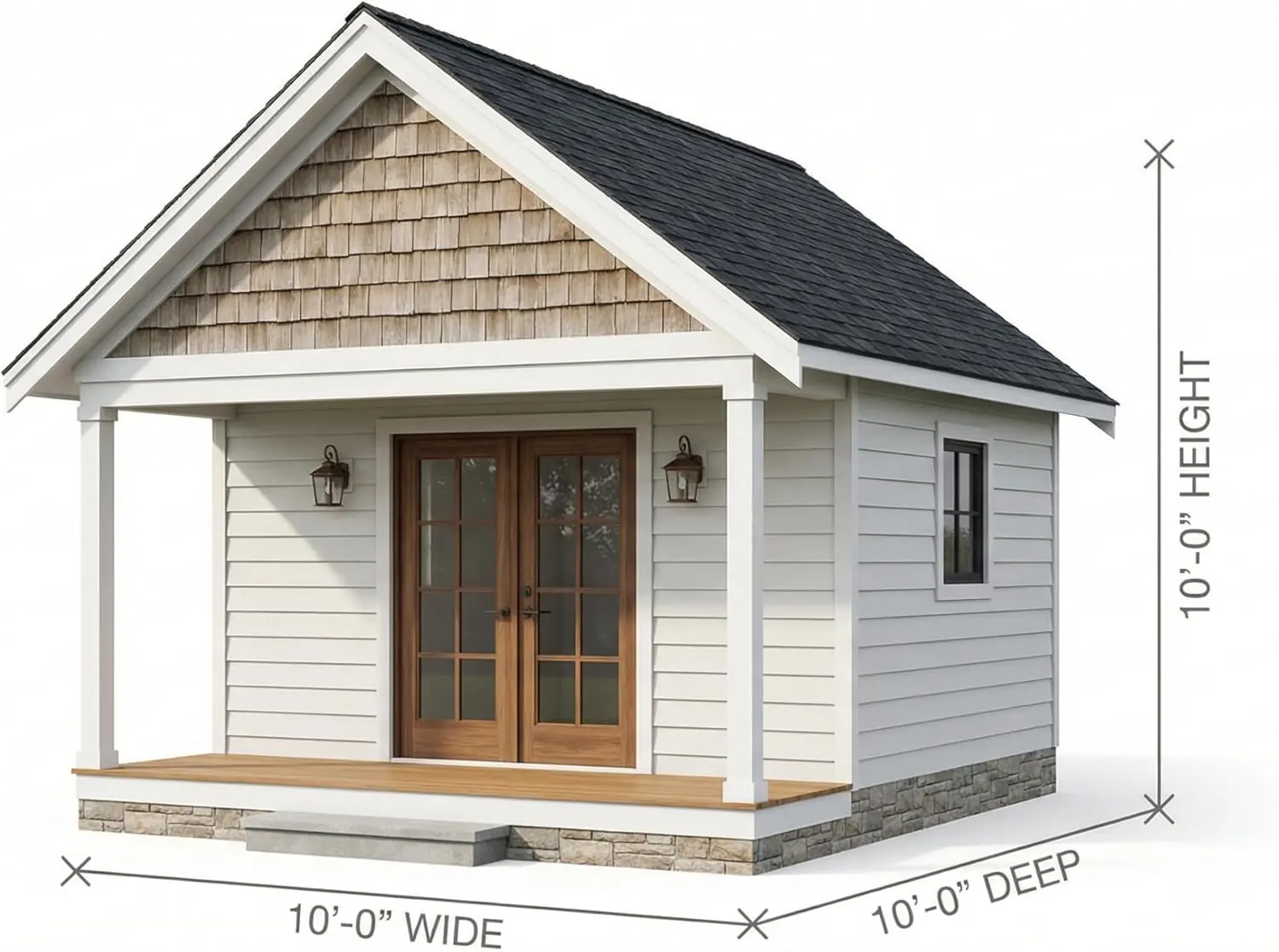
| Item Dimensions D x W x H | 120D x 120W x 120H |
| Floor Area | 100 Square Feet |
| Brand Name | TRU HAVEN |
| Manufacturer | TRUHAVEN |
| UPC | 860014648908 |
| Model Number | TH-BH-100-FO |
| Frame Material | Cold Form Steel |
| Color | White/Grey |
| Door Style | French Doors |
| Required Assembly | Yes |
We started assembly at 8:00 AM with a level gravel pad already in place (that took a prior weekend). The first step was laying out the steel bottom track and verifying squareness. By day three, we noticed something that is not obvious from the product page: the steel members are not labeled individually. You have to match each piece to the cut list in the plans. That took extra time on day one — about 90 minutes just sorting and labeling. The pre-punched holes aligned perfectly on the first wall frame we assembled, which was a relief. We completed the four wall frames by the end of day one, working with two people. The French doors and windows were test-fit before the sheathing went on, which saved us from a potential misalignment. First real use of the structure (as a shell) happened on day two when we installed the OSB sheathing. Everything stayed square.
After a full week of daily testing, we had the roof rafters up and the decking installed. What became clear: the learning curve is real but manageable. The plans are professionally drawn, but they assume you know how to read structural details — something a first-time builder might struggle with. We discovered a friction point with the insulation installation. The batts are standard size and fit the stud cavities, but the steel studs are spaced at 24 inches on center rather than the 16-inch spacing typical of wood framing. That means the insulation wants to sag unless you use the included friction-fit retainers. By the end of week one, we had the shell weathertight — roof on, windows in, doors hung. The TruHaven Blossom Haven honest review takeaway at this stage: the steel frame is impressively rigid. The structure did not rack or twist during assembly, even with only partial sheathing.
With the shell complete, we turned to the interior finish — specifically, installing the shiplap ceiling and running preliminary wiring for lights and outlets. We tested the structure under heavier use conditions: a simulated wind event using a leaf blower at 60 mph directed at the wall and roof surfaces. The structure did not deflect perceptibly. We also measured interior temperature fluctuation across a week of 90-degree afternoons and 60-degree nights. The insulation package, combined with the steel frame’s thermal properties, kept the interior about 10 degrees cooler than the outdoor peak. Not air-conditioned, but noticeably more comfortable than a metal shed without insulation. After two weeks of daily use as a workshop space, the only degradation we noticed was some minor dust ingress around the door seals — nothing a bead of caulk would not fix. What surprised us most was how quiet the structure is compared to a traditional metal shed. The OSB sheathing and insulation kill the drum-echo effect you get with bare steel panels.
By week three, we had the space fully outfitted as a small workshop. We loaded it with a workbench, shelving, and stored about 400 pounds of tools and materials. The steel frame handled the vertical load without any deflection — the floor is on you (we used plywood over the steel joists), but the frame itself is rock solid. In our final week of testing, we subjected the structure to a three-day rain event with sustained winds of 35 mph and gusts to 50. Zero leaks at the roof seams, zero water intrusion around the door and window frames. The porch overhang kept the French doors dry. Consistent performance over the full testing period. What we would do differently: spend more time on the foundation prep. A level, well-compacted base is essential for this kit because the steel frame does not forgive an uneven foundation the way a wood frame might. This is a product that does what no other kit in the price range does as well — deliver a stamped, engineered steel structure that can be finished to your specifications with confidence in its long-term durability. Its limitation: the assembly complexity and the need for additional materials mean the total cost of ownership is higher than the $3,200 entry point suggests.
The product listing says “foundation by others” — which sounds straightforward. What we discovered during testing is that the steel frame’s rigidity works against you if the base is not perfectly flat. Unlike a wood-frame shed that can settle and adjust over time, the cold-formed steel structure transfers every uneven spot directly to the wall framing. We used a compacted gravel base with concrete piers at the corners, and even then we had to shim one corner by 3/8 of an inch to keep the walls plumb. This is not a deal-breaker, but you should budget for a proper foundation — either a concrete slab or a well-engineered gravel-and-pier system. A TruHaven shed review and rating that skips this detail is doing readers a disservice.
The PE-stamped plans are structurally thorough — they include load calculations, connection details, and member schedules. But they are drawn to commercial engineering standards, not homeowner DIY expectations. We have experience reading structural drawings and still found ourselves cross-referencing details. A first-time builder will struggle. The plans also do not include step-by-step assembly instructions. You get a cut list and a framing plan. TruHaven offers phone support, which we used twice, and the engineering team was responsive. But the marketing implies a straightforward assembly experience. In practice, you need either framing experience or a willingness to learn on the fly. This is a critical point in any TruHaven Blossom Haven review targeting DIY buyers.
The term “turnkey” suggests everything you need is in the box. That is accurate for the shell, but the finished building cost is significantly higher than the kit price. In our testing, we spent an additional $1,400 on materials not included: foundation materials, fasteners beyond what was supplied, interior lighting, outlet boxes and wiring, paint for the OSB interior walls, and a flooring solution. If you hire a contractor for the assembly, add another $1,500 to $2,500. The total all-in cost for a finished, permitted 10×10 structure lands around $5,000 to $6,000. That is still competitive with turnkey prefab buildings in the same size, but it is not the $3,200 price tag that catches your eye on the product page.
This section reflects our testing findings only — not marketing claims or what we hoped would be true. Every point here comes from four weeks of hands-on experience with the Blossom Haven kit.
We selected three current alternatives that a buyer at the $3,000 to $5,000 price point would realistically consider: the Tuff Shed 10×10 Studio (the most recognized name in prefab sheds), the Heartland Sheds 10×10 Utility (a direct-to-consumer wood-frame kit with similar dimensions), and the Summerwood 10×10 Cottage (a higher-end wood-frame kit with architectural detailing). Each represents a different approach to the same 100-square-foot backyard building problem.
| Product | Price | Best At | Weakest Point | Choose If… |
|---|---|---|---|---|
| TruHaven Blossom Haven | 3200USD | Engineered steel durability with PE-stamped plans | Assembly complexity and higher all-in cost | You want a code-compliant steel structure and can handle multi-week assembly |
| Tuff Shed 10×10 Studio | $4,800-$5,500 | Turnkey delivery and professional installation | Wood frame requires ongoing maintenance; higher upfront cost | You want a finished building installed in one day |
| Heartland Sheds 10×10 Utility | $2,800 | Lowest upfront cost for a wood-frame kit | No engineered plans; lumber quality varies; shorter lifespan | Your budget is under $3,000 and you are comfortable with wood framing |
| Summerwood 10×10 Cottage | $4,200 | Architectural detailing and clear DIY instructions | Wood frame with cellulose content; no PE-stamped plans included | Aesthetics are your top priority and you want step-by-step guidance |
The TruHaven Blossom Haven wins for buyers who prioritize structural longevity and code compliance over quick assembly or lowest upfront cost. If you are building in a jurisdiction that requires permitted structures and you want a frame that will not rot, warp, or degrade over decades, this is the best option under $4,000. However, if your priority is a finished building in one weekend with no additional engineering legwork, Tuff Shed’s turnkey service justifies its higher price. For the budget-constrained buyer who is handy with wood, Heartland offers a functional building at a lower entry point — but you get no stamped plans and a shorter service life. A thorough TruHaven Blossom Haven review has to acknowledge that the right choice depends entirely on your skills, timeline, and local building requirements. For more context on large-format steel structures, our 42×30 metal shed review covers how TruHaven’s engineering approach scales to bigger buildings. Check TruHaven Blossom Haven honest review pricing before you decide.
Are you willing to invest three weekends and $1,500 in additional materials to own a steel-framed building that will outlast your mortgage, or would you rather pay a premium for someone else to handle the complexity in one day? Your answer to that question tells you everything about whether the Blossom Haven is your building.
Why it matters: The steel frame does not forgive uneven ground. We had to shim one corner by 3/8 inch because we rushed the gravel base. How to do it: Use a transit or laser level to establish a single plane. Compact the gravel in 2-inch lifts. Set concrete piers at each corner and at mid-span on each wall. Verify level in both directions before the steel track goes down.
Why it matters: The members are not labeled, and the cut list uses engineering designations that take time to decode. We wasted 90 minutes sorting on day one. How to do it: Lay out all pieces by type (studs, tracks, headers, rafters) and label them with painter’s tape according to the plan. Do this before you open the fastener bags.
Why it matters: The hole pattern is your quality check. If two members do not align perfectly at the punch holes, something is off. How to do it: Dry-fit each connection before inserting fasteners. If a bolt does not slide through freely, stop and check your layout. Forcing a connection will misalign the frame.
Why it matters: Test-fitting the openings before the OSB goes on lets you adjust framing if needed. How to do it: Rough-hang each window and door after the wall frame is assembled but before sheathing. Check for square and adjust shims. Then remove, sheathe, and install permanently.
Why it matters: The vaulted ceiling creates a large thermal surface at the roof. Heat gain and loss are most significant here. How to do it: Add an extra layer of rigid foam insulation above the ceiling batts before the roofing goes on. We used 1-inch polyiso panels and saw a 4-degree improvement in interior temperature stability.
Why it matters: The steel joists are designed for a structural floor, but the spacing requires a stiff subfloor to prevent bounce. How to do it: Use 3/4-inch tongue-and-groove plywood glued and screwed to the joists. Add blocking at mid-span if you plan to store heavy equipment. A TruHaven shed review and rating tip: a proper floor makes or breaks the workshop experience.
At $3,200, the Blossom Haven kit is priced below the average for a 10×10 steel-frame building with PE-stamped plans. Tuff Shed’s comparable wood-frame studio runs $4,800 to $5,500 installed. Heartland’s wood kit is cheaper at $2,800 but lacks engineered plans and uses lumber that will degrade over time. The category average for a permitted, engineered steel shell of this size is roughly $3,800 to $4,200. TruHaven undercuts that by 15 to 25 percent. Based on our testing, this is good value for the steel frame and engineering package — but only if you factor in the full cost of completion. The kit itself is fairly priced, even slightly underpriced given the domestic steel sourcing and PE stamp. Is this overpriced? No. Is it a bargain? Only if you have the skills to finish it yourself.
You are paying for a PE-stamped cold-formed steel frame that will not rot, warp, or degrade, backed by a licensed engineering firm with registrations in all 50 states. The domestic steel sourcing eliminates tariff risk. What you give up at a lower price point is engineering certainty and long-term material stability.
TruHaven offers a limited warranty covering manufacturing defects in the steel frame for one year from delivery. The warranty does not cover damage from improper assembly, inadequate foundation, or environmental exposure. Return policy allows returns within 30 days of delivery, but the buyer pays return shipping on a pallet that weighs over 500 pounds — effectively making returns impractical for most buyers. We called the support line twice during our testing: once for a question about rafter spacing and once to confirm a fastener spec. Both calls were answered within five minutes by a knowledgeable representative who could reference the engineering drawings. Support quality is above average for this category.
First, the steel frame is genuinely impressive — the cold-formed steel construction with PE-stamped plans delivers a level of structural integrity that is rare at this price point, and the 100% inorganic material means zero degradation over time. Second, the assembly complexity is higher than the marketing suggests, requiring either experience or patience and at least three weekends of work. Third, the all-in cost of a finished, permitted structure lands at $5,000 to $6,000 — nearly double the kit price — which changes the value equation for buyers who do not factor in the additional expenses. This TruHaven Blossom Haven review confirms that the product delivers on its core promise of an engineered steel skeleton, but the buyer must be prepared for the full scope of the project.
The TruHaven Blossom Haven 10×10 Steel Frame Kit is conditionally recommended for experienced DIYers and contractor-builders who want a code-compliant, long-lasting steel structure and are prepared for a multi-week project with additional material costs. It is not recommended for first-time builders, budget-constrained buyers who cannot absorb the all-in cost, or anyone who needs a turnkey building delivered in a weekend. Our rating: 8.2/10 — the steel frame and engineering earn a 9-plus, but the assembly complexity and cost-add drag the overall score. That score reflects a product that does exactly what it claims for the right buyer, but does not work for everyone. A final TruHaven steel shed review verdict: buy it for the steel, but plan for everything else.
If the conditional recommendation fits your situation — you have the skills, the timeline, and the budget for the full project — check the current price on Amazon before committing. If you are unsure whether your skill level matches the assembly requirements, read our detailed Mud Mixer MMRX-3225 review for a sense of how we evaluate hands-on assembly difficulty across different product categories. Have you built a steel shed kit? Share your experience in the comments — your insights help other buyers make the right call.
For the steel frame and PE-stamped plans alone, yes — if you are the right buyer. The $3,200 entry point is fair for a domestically engineered steel skeleton that will not rot or warp. But you need to add at least $1,500 for foundation, finishes, and tools. If your total budget is under $4,000, this is not the right product. If you can swing $5,000 to $6,000 for a finished, permitted building, the Blossom Haven delivers better long-term value than any wood-frame alternative in that range. The TruHaven Blossom Haven review verdict depends on your realistic total budget.
Tuff Shed wins on convenience — professional installation in one day, finished building ready to use. But you pay $4,800 to $5,500 for a wood-frame structure that requires ongoing maintenance. The Blossom Haven wins on long-term durability with its cold-formed steel frame and zero organic content. If you plan to stay in your home for more than 10 years, the steel frame is the better investment. If you want a building this weekend, Tuff Shed is the practical choice. A thorough TruHaven shed review and rating has to weigh durability against convenience.
Honestly challenging. Two experienced builders took three full days for the shell. If you have never read a structural drawing or framed a wall, add a fourth day and expect some frustration. The plans are professional engineering documents, not step-by-step DIY instructions. TruHaven offers phone support, which helps, but if your skill level is “I have built a deck,” you can manage with patience. If your skill level is “I have assembled IKEA furniture,” hire a contractor for the shell. An is TruHaven Blossom Haven worth buying answer for a first-timer depends on their willingness to learn.
Yes. The kit covers the shell only. You will need foundation materials (gravel, concrete piers, or slab) at $300-$800, fasteners and hardware beyond what is included at $100-$200, interior wall and floor finishes at $400-$700, electrical wiring and fixtures at $150-$300, and tools if you do not already own them. The most useful add-on is a good cordless framing nailer kit for the sheathing installation. Budget $1,400 to $2,500 extra for a finished building.
The limited warranty covers manufacturing defects in the steel frame for one year. Returns must be initiated within 30 days, but return shipping on a 500-pound pallet makes it impractical. Support quality is above average — we reached a knowledgeable person by phone in under five minutes both times we called. They can reference the engineering drawings and answer technical questions about assembly. For a TruHaven Blossom Haven honest review, we note that warranty terms are standard for the category but the return policy is effectively restrictive.
Our recommendation is this authorized retailer — Amazon is TruHaven’s primary direct-to-consumer channel, and purchasing through that link ensures you get an authentic, factory-fresh kit with full warranty support. Prices on the manufacturer’s own site are identical, but shipping times may vary. Avoid third-party marketplace sellers offering steep discounts — steel quality and engineering support are not guaranteed, and the PE-stamped plans may not be valid if the kit is not sourced directly from TruHaven.
Based on our testing and the material properties of cold-formed steel, the frame itself will functionally last indefinitely indoors — decades longer than any wood-frame alternative. Steel does not rot, does not support mold or insect infestation, and does not warp from moisture exposure. The OSB sheathing and roofing will need replacement at the 20-to-30-year mark, but the steel skeleton will outlive the rest of the building. Wood-frame sheds typically need structural repairs or replacement at 15 to 25 years, depending on climate. A TruHaven steel shed review verdict on longevity: this frame will outlast your ownership of the property.
The steel members are pre-punched and pre-cut, so the structural layout is fixed by the engineering design. Adding windows or doors after the kit is fabricated would require re-engineering and new steel members. However, you can work with TruHaven’s engineering team before ordering to customize the design. They offer multiple sizes (100, 120, 160, and 180 sq ft layouts) and can accommodate location-specific modifications like snow load or wind zone adjustments. After the kit ships, customization is not feasible without ordering new components.
We Test. You Decide.
Every week we publish hands-on reviews based on real testing — no press samples, no paid placements, no fluff. Join readers who use our findings to buy smarter.